
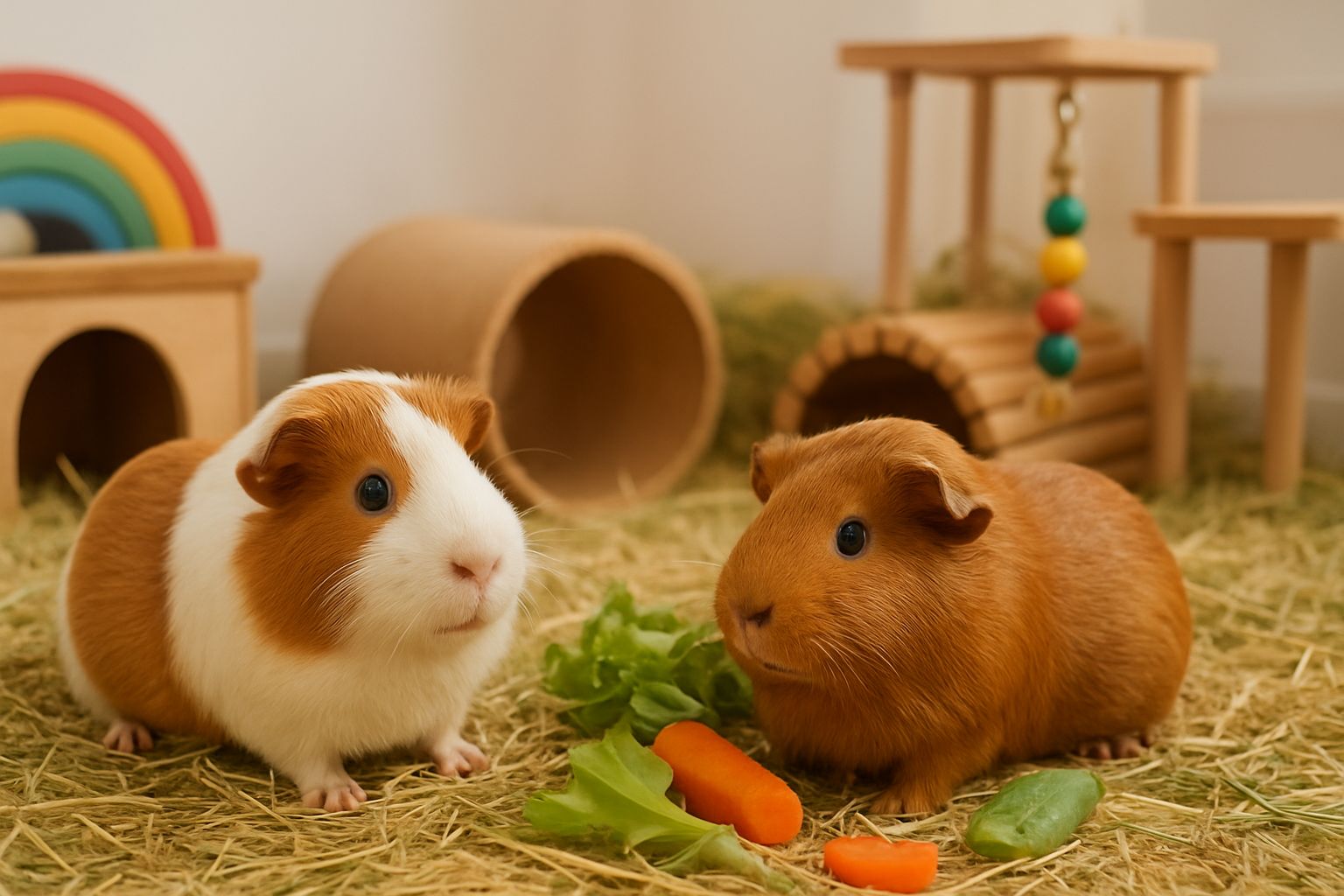
Guinea Pig Setup Guide: Creating the Perfect Habitat
Guinea pigs are chatty, charismatic little creatures that have been winning hearts for centuries. But the tiny cages sold at most pet stores? They're basically the guinea pig equivalent of a prison cell. Here's how to give your piggies the spacious, stimulating home they deserve.
The #1 Rule: Guinea Pigs Need Friends
This is non-negotiable. Guinea pigs are herd animals that become depressed and lethargic when kept alone. In fact, it's actually illegal to keep a single guinea pig in Switzerland. Always keep at least two — ideally a bonded pair. Same-sex pairs or a neutered male with one or more females work well. Two males can live together if introduced young and given enough space.
Cage Size: Go Big or Go Home
The absolute minimum for two guinea pigs is 10.5 square feet (a 2x4 C&C cage — Cubes and Coroplast, the gold standard in the guinea pig community). But bigger is always better — a 2x5 or 2x6 cage gives them room to popcorn (that joyful little hopping dance guinea pigs do when they're happy). Store-bought cages marketed for guinea pigs are almost always too small — ignore the packaging and measure the actual floor space.
The best DIY setup: C&C grids zip-tied together with a Coroplast (corrugated plastic) base. It's affordable, customizable, and gives your pigs the space they need.
Bedding Choices
Fleece liners: The most popular choice among experienced owners. Layer absorbent material (like U-Haul furniture pads or puppy pads) under fleece blankets. The fleece wicks moisture through to the absorbent layer, keeping the surface dry. Wash and reuse. Upfront cost is higher but saves money long-term.
Paper bedding: Good absorbency and odor control. Brands like Carefresh or Kaytee clean & cozy. Avoid cedar or pine shavings — the aromatic oils cause respiratory problems.
Spot-clean droppings daily and do a full cage clean weekly. Guinea pigs poop a lot — staying on top of it keeps odors down and your pigs healthy.
Essential Cage Items
Hide houses: At least two (one per pig) so nobody has to share. Wooden houses, fleece tunnels, or even cardboard boxes with doors cut out.
Hay rack or pile: Guinea pigs, like rabbits, need unlimited hay. Timothy hay for adults, alfalfa for babies and pregnant sows. Hay is 80% of their diet.
Water bottle or bowl: Some owners prefer bottles (less mess), some prefer bowls (more natural drinking posture). If using bottles, check the nozzle daily — they can clog.
Food bowl: Heavy ceramic so it doesn't tip. Pellets should be plain, timothy-based, and vitamin C fortified (guinea pigs, like humans, can't produce their own vitamin C).
Toys and enrichment: Tunnels, wooden chews, crumpled paper, and treat balls. Guinea pigs aren't big climbers, but they love exploring and hiding.
The Vitamin C Factor
Guinea pigs need 10-30mg of vitamin C daily — they can't synthesize it themselves. Without it, they develop scurvy (yes, like pirates). Provide vitamin C through fresh veggies (bell peppers are excellent — one slice of red bell pepper has more than enough), supplemented pellets, and occasional vitamin C drops in water (though these degrade quickly in light). Never rely on vitamin C in water alone — fresh veggies are the best source.
Location Matters
Place the cage in a room where your family spends time — guinea pigs are social and want to be part of the action. Avoid direct sunlight, drafts, and damp areas. Temperature matters: 65-75°F is ideal. Guinea pigs are sensitive to heat and can die in temperatures above 80°F.
Ready to bring home your first piggies? Our Small Pet Starter Kit ($9.99) has complete setup checklists, feeding guides, and health tracking sheets for guinea pigs, rabbits, and hamsters — everything you need to start right.
Keep reading: rabbit care for first-time owners and hamster enrichment ideas. And check out our Small Pet Starter Kit to make it easy.
Leave a Comment
We'd love to hear from you!
Thanks for reading!