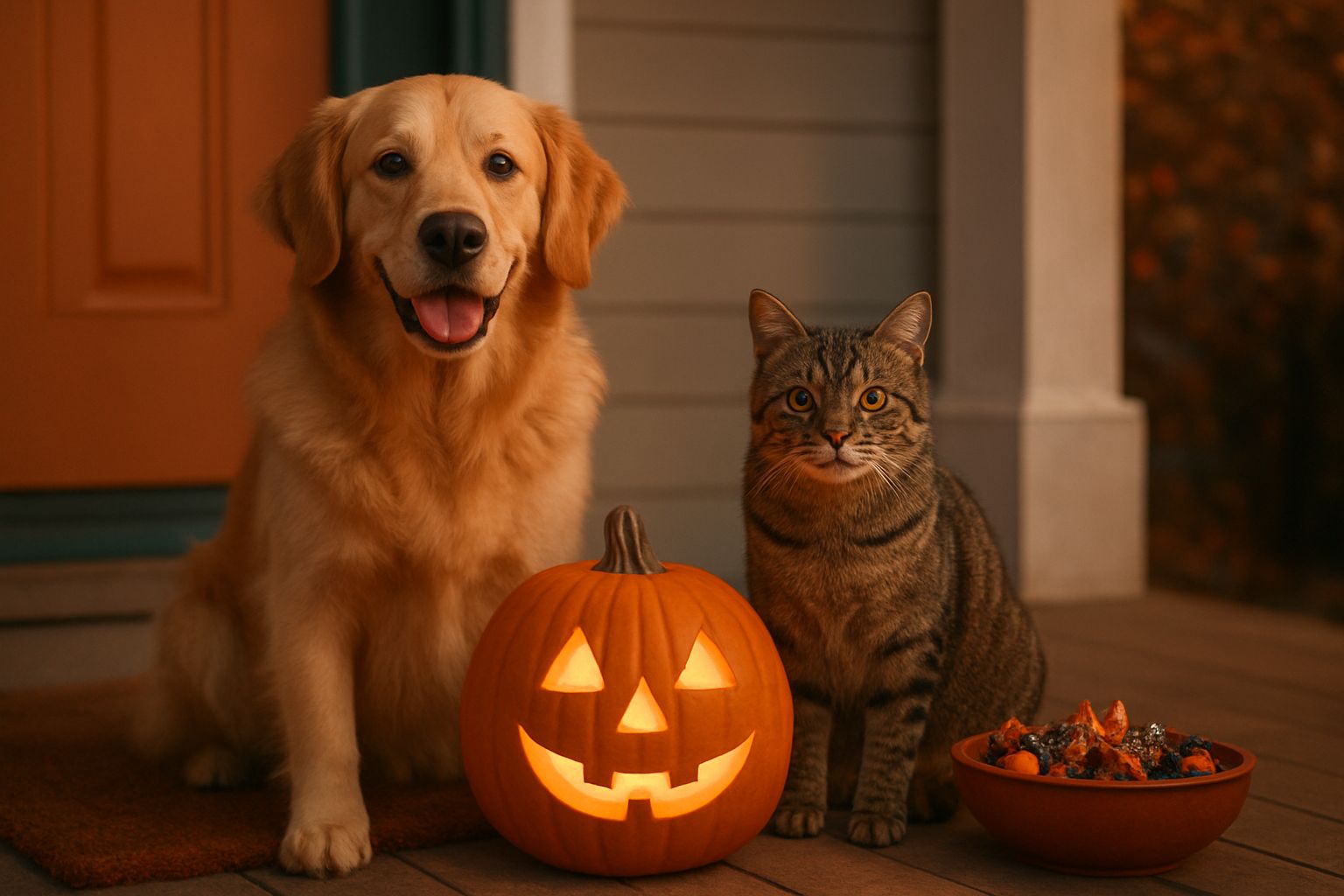
Halloween Candy Safety: What's Toxic to Dogs and Cats
Every October, veterinary clinics see a predictable spike in emergency calls — and most of them involve one thing: the trick-or-treat bowl. Halloween is a blast for humans, but between the candy, the costumes, and the constantly ringing doorbell, it's a minefield for pets. Here's exactly what to watch for and how to keep your furry family safe this spooky season.
The Big Three: Chocolate, Xylitol, and Raisins
Chocolate is the classic danger, and for good reason. It contains theobromine and caffeine, which dogs and cats can't metabolize efficiently. Dark chocolate and baking chocolate are far more dangerous than milk chocolate — a single ounce of baker's chocolate can be life-threatening to a small dog. Symptoms appear within 6-12 hours: vomiting, diarrhea, restlessness, rapid breathing, tremors, and seizures.
Xylitol is arguably even more dangerous, and most people have never heard of it. This sugar substitute hides in sugar-free gum, mints, some peanut butters, and "low-sugar" baked goods. In dogs, xylitol triggers a massive insulin release that crashes blood sugar within 30-60 minutes — causing weakness, collapse, and seizures. It can also cause fatal liver failure. Even a single piece of sugar-free gum can kill a small dog.
Raisins and grapes are another silent killer. Nobody's sure exactly why, but grapes can cause sudden kidney failure in dogs — and it only takes a handful of raisins. Since raisins turn up in Halloween trail mixes and "healthy" treats, keep them far away.
Other Candy Dangers
Beyond the big three, watch for: macadamia nuts (weakness and tremors), candy wrappers (foil and plastic can cause intestinal blockages), and hard candies and lollipop sticks (choking hazards). Even non-toxic candy can cause an upset stomach from the sugar and fat — and a pancreatitis flare-up in sensitive dogs.
If your pet eats something dangerous, call your vet or the ASPCA Poison Control hotline immediately. Don't wait for symptoms, and never induce vomiting without veterinary guidance — it can do more harm with certain substances. Our Pet First Aid Guide ($7.99) walks you through exactly what to do in a poisoning emergency, step by step.
Beyond Candy: Decorations and Doorbell Stress
Candy isn't the only hazard. Candles in jack-o'-lanterns can be knocked over by curious tails — use battery-operated lights instead. Glow sticks are a chew magnet, and while the liquid inside is usually only mildly irritating, it tastes terrible and can cause drooling and agitation. Fake cobwebs and string lights can tangle around legs or be swallowed, causing intestinal blockages. And electrical cords from decorations are a chewing hazard for puppies and kittens.
Then there's the doorbell. Constant strangers in costumes can send even calm pets into a frenzy — some dogs lunge, some cats bolt for hiding spots. Set up a quiet room away from the front door with a comfy bed, white noise, and a favorite chew toy to keep them occupied. For anxious dogs, a snug-fitting anxiety wrap or calming treats before trick-or-treating begins can work wonders.
Want more seasonal safety checklists? Check out our summer heat safety guide and stay tuned for our Thanksgiving and Christmas safety posts. And if your pup loves dressing up, make sure costumes fit properly and never restrict breathing, vision, or movement — a simple festive Halloween "Boo" tee or pet bandana is often safer than a full costume.
🎃 Ready to get your pet Halloween-ready? Shop the Halloween Collection → — festive tees, bandanas, and bowties for the whole family.
Have a safe and happy Halloween — and keep that candy bowl out of paw's reach!
Leave a Comment
We'd love to hear from you!
Thanks for reading!