
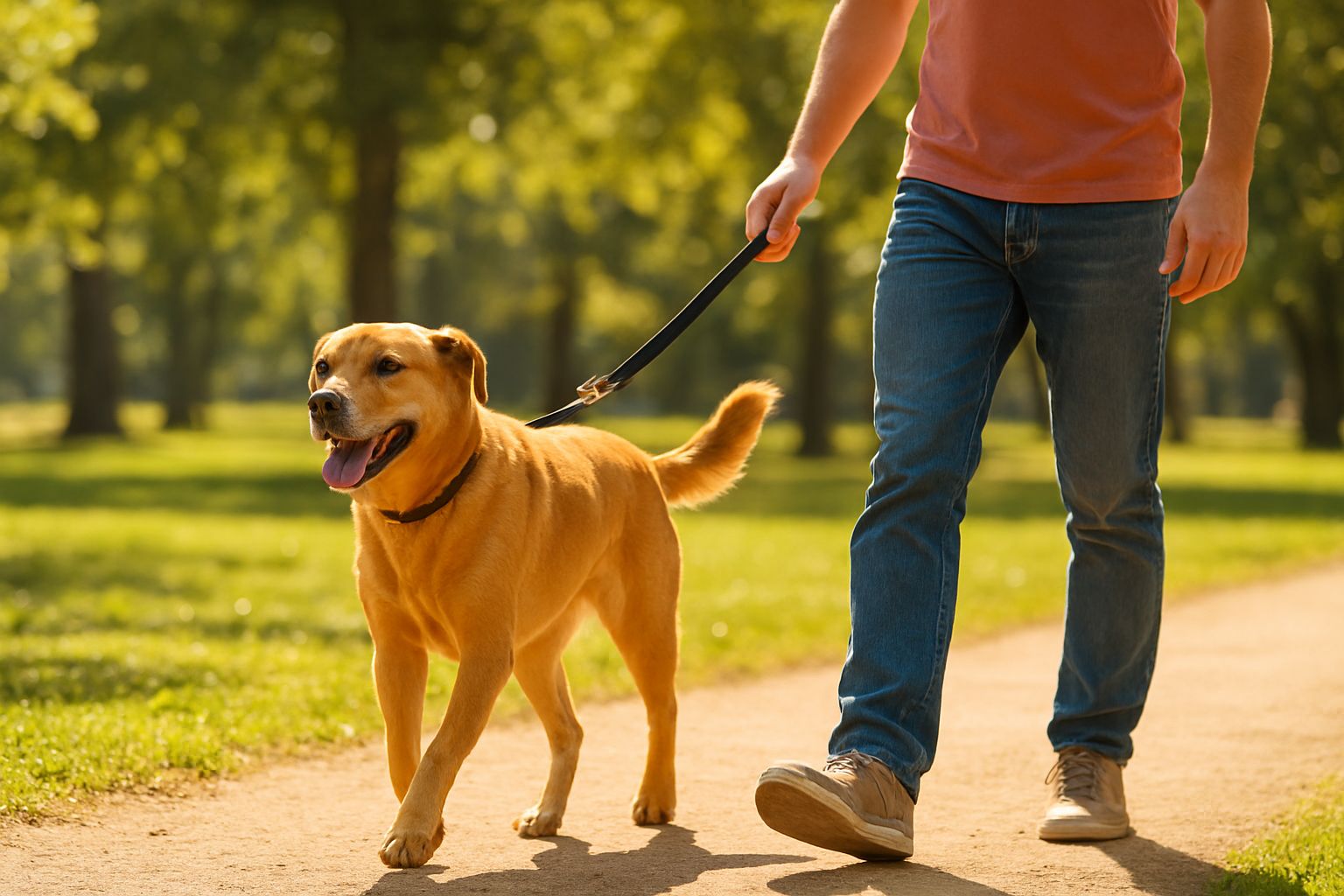
Loose Leash Walking: A Step-by-Step Method
Walking your dog should be enjoyable — not an arm workout. If your dog pulls like a sled dog every time you clip on the leash, you're not alone. The good news: loose leash walking is a trainable skill, and it doesn't require harsh tools or corrections.
Why Dogs Pull
First, understand that pulling works — for your dog. They pull forward, you follow. That's classic positive reinforcement: the pulling behavior is rewarded with forward movement. To fix it, you need to break that reward cycle.
The Method: Stop-and-Go
This is the most reliable method for teaching loose leash walking. Here's the step-by-step:
Step 1: Start in a low-distraction area — your driveway or a quiet sidewalk. Clip on the leash and stand still.
Step 2: The moment there's tension on the leash, stop moving. Become a statue. Don't yank, don't yell — just stop.
Step 3: Wait for the leash to go slack. This might take 5 seconds or 30. The instant there's slack, mark it ("yes!") and start walking again.
Step 4: Reward generously when your dog walks beside you with a loose leash. Treats, praise, or forward movement — whichever motivates your dog most.
Step 5: Repeat. A lot. Expect your first few walks to cover about 50 feet in 20 minutes. That's normal and part of the process.
Common Mistakes
Mistake #1: Starting in an exciting place. Your dog can't learn a new skill at the dog park or on a busy street. Start boring, build up.
Mistake #2: Using a retractable leash. These teach your dog that pulling creates more freedom. Switch to a standard flat leash for training.
Mistake #3: Inconsistency. If you sometimes let pulling slide (because you're in a hurry), your dog learns that pulling works sometimes — which is the hardest behavior to extinguish.
What Gear Helps
A well-fitted flat collar or harness is all you need to start. Front-clip harnesses can reduce pulling by redirecting your dog's momentum — but they're a management tool, not a training replacement. The goal is a dog who walks nicely regardless of gear.
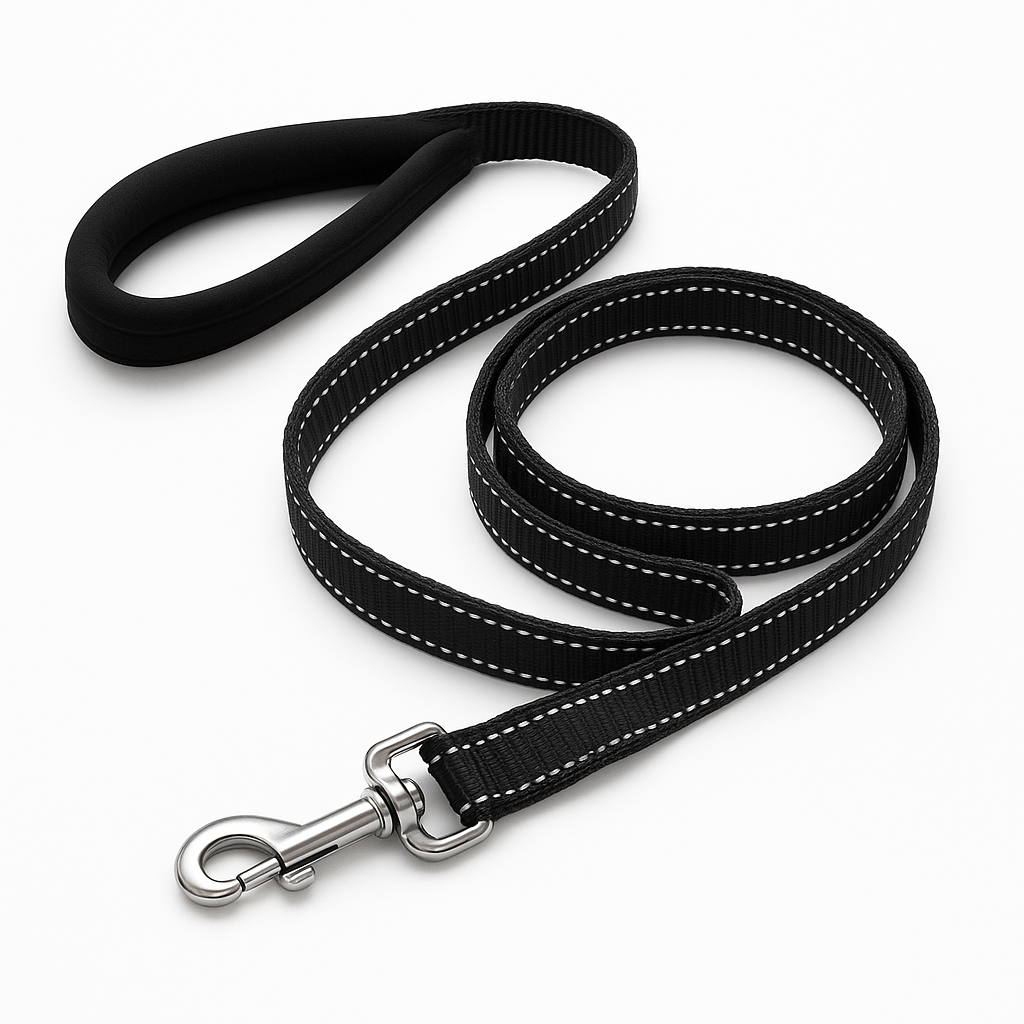
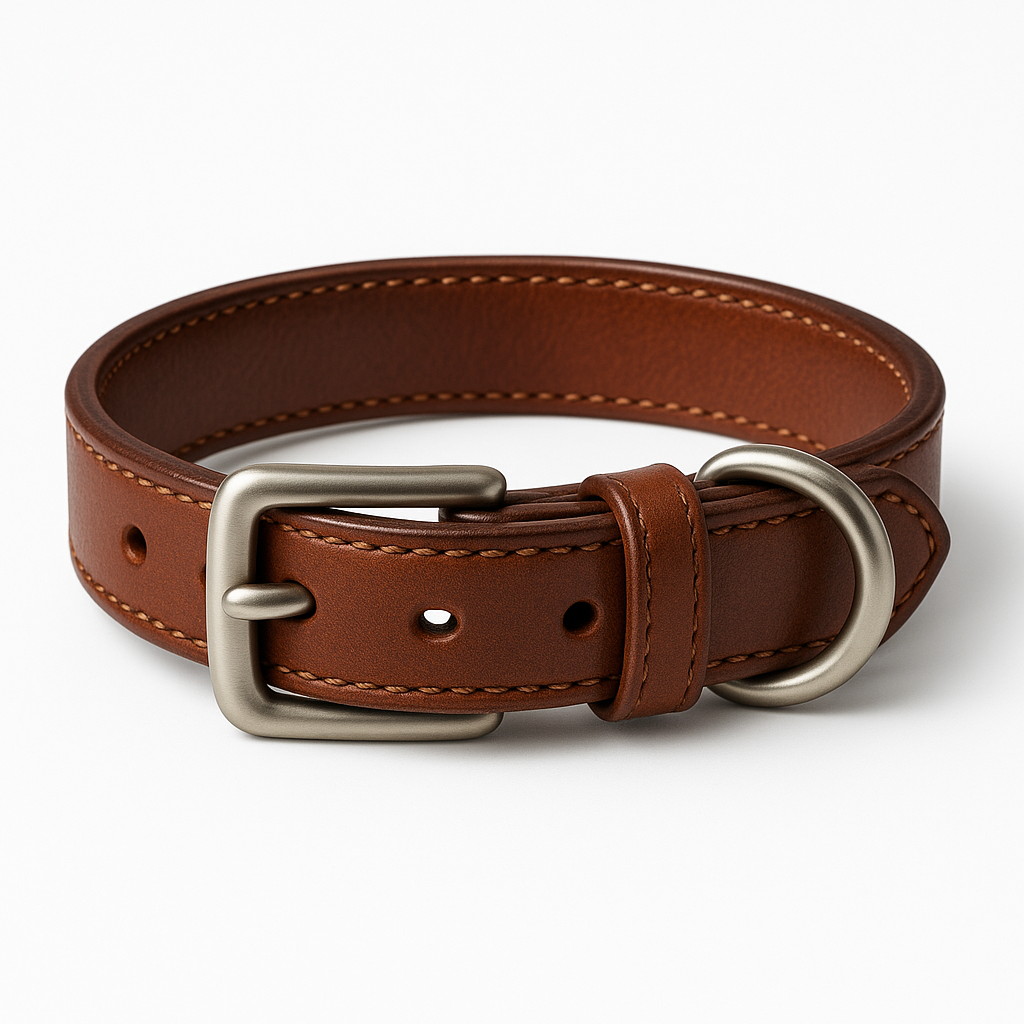
A quality nylon reflective leash gives you control without being heavy or uncomfortable. Pair it with a comfortable adjustable leather collar for a setup that's both practical and stylish.
How Long Does It Take?
With 10-15 minutes of dedicated practice per day, most dogs show significant improvement in 1-2 weeks. Consistency beats intensity — short, frequent sessions work better than one marathon walk.
Gear up for training success — browse our dog walking essentials for leashes, collars, and training treats!
Training a puppy? Our Puppy Training Checklist & Milestone Tracker has step-by-step guides for everything from sit to loose leash — just $4.99.
Keep reading: stopping your dog from jumping on guests and five signs your dog needs more exercise. And check out our nylon reflective leash to make it easy.
Shop This Article

Leave a Comment
We'd love to hear from you!
Thanks for reading!